
Back

7 minutes
Stories
Is Sourdough Healthier Than Regular Bread?
Lauren Leone

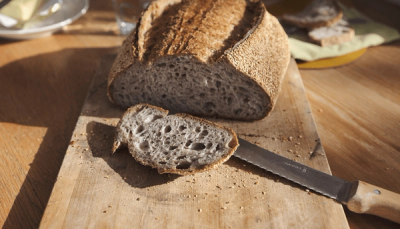
Sourdough is undoubtedly one of the most popular types of bread and is beloved for its unique flavor, rustic texture, and perceived health benefits. But is sourdough truly healthier than regular bread? Let’s separate fact from fiction as we delve into the science of how sourdough is made, to see just how healthy this classic bread is!
Let’s begin with the basics as we break down the key components of bread. Regular bread is typically made up of flour, water, and yeast, and often has other added sugars and preservatives.
So how does sourdough differ? That would be the unique fermentation process that utilizes wild yeast and lactic acid bacteria that are naturally present in flour. This process gives sourdough its signature tangy taste and chewy texture.


Because of the wild yeast and lactic acid bacteria, sourdough is said to be easier to digest and supply more nutrients than other types of bread. Additionally, sourdough can promote positive gut health by containing pre-optic fiber, which can support beneficial bacteria in your gut. These beneficial bacteria, called probiotics, can support digestion, improve nutrient absorption, and overall promote a healthy immune system.
Another benefit to sourdough is that it’s often lower on the glycemic index (GI) than other types of bread. The GI is a scale from 0-100 that is used to measure how fast an individual’s blood sugar level can rise when they eat certain types of food. For instance, sourdough has a glycemic index of 54 while more refined breads register at 71. This means that sourdough won’t raise your blood sugar levels as fast as other white breads.
A common misconception is that sourdough is gluten-free. While the fermentation process of sourdough helps break down gluten proteins, sourdough is not gluten-free. This breakdown may make sourdough more tolerable for individuals with gluten sensitivities, it’s important to note that sourdough still contains gluten and is not suitable for individuals with celiac disease or gluten intolerance.
While sourdough boasts potential health benefits, it’s important to look at the big picture. Both sourdough and regular bread can be part of a healthy diet when consumed in moderation. Portion sizes, nutrient content, and overall dietary patterns should be taken into consideration when determining the healthiness of your bread choices.
It’s also important to remember that potential health benefits will differ from individual to individual, depending on diet, health conditions, and other factors.


Between the battle of sourdough and regular bread, it is relevant to acknowledge and understand the unique qualities of each type of bread. Sourdough’s fermentation process may enhance its digestibility, introduce beneficial bacteria and increase its nutrient availability. However, sourdough should be enjoyed as part of a balanced diet, and should not be considered a magical cure-all.
So whether you decide to grab a warm slice of sourdough or opt for a classic loaf, enjoy it as part of a balanced diet with these benefits in mind!
Is Sourdough Healthier Than Regular Bread? on Instagram
Is Sourdough Healthier Than Regular Bread? on Facebook
Related stories


5 minutes
News
Hattie's Bread Box Bakery is on the Rise
Lauren Leone


10 minutes
News
Fig and Bean Bakery: Taking Gluten-free bread to new heights
Sam Stevens


2 minutes
News
Ensuring Safety and Quality: Simply Bread Ovens now shipping with NSF Certification
Simply Bread Co.


4
Recipes
Vegan Morning Buns Recipe
Lauren Leone / Lisa Allen


9
Baker tips
Branding Your Cottage Baking Business


5 minutes
Stories
Simply Bread Oven – Compact Commercial Grade Oven for Small Food Businesses
Liana Gailand


5 minutes
Recipes
Sonora Blueberry Lemon Babka with Karen Quinones
Karen Quinones


3 minutes
Recipes
Dark Pan Loaves | Simply Bread Recipe
The Simply Bread Team